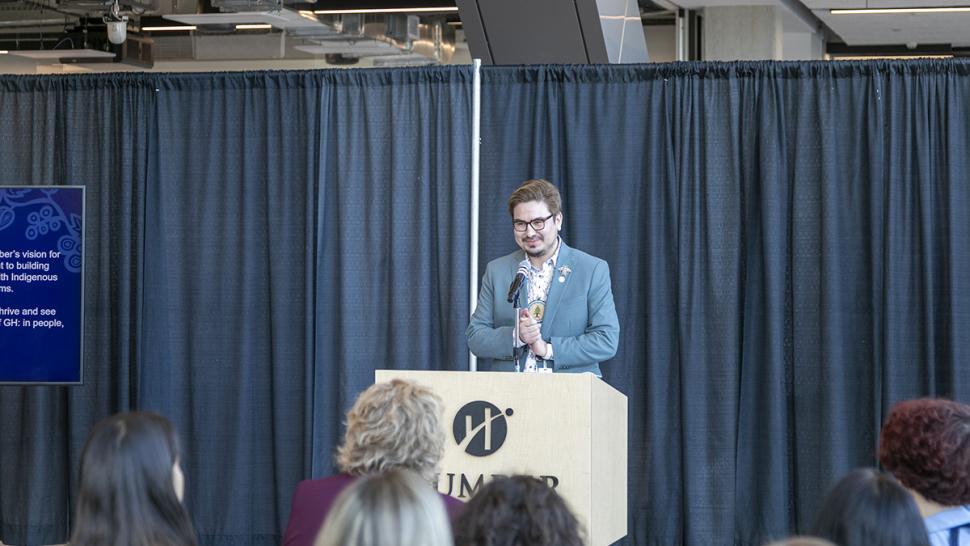
Humber Polytechnic is inviting its community to actively engage in reconciliation through Indigenous education that is meaningful, relational and accountable with the release of its new Indigenous Education Plan.
Biskaabiiyang: Returning to Ourselves, Reimagining the Future is both a vision and a call to collective action. It guides how Humber carries forward its responsibilities to Indigenous students, communities and knowledge systems through relationship, action and sustained commitment.
Humber’s vision for Indigenous Education is grounded in its commitment to building respectful, reciprocal and accountable relationships with Indigenous Peoples, communities and knowledge systems. Humber envisions a community where Indigenous learners thrive and see themselves reflected across every part of Humber and the University of Guelph-Humber in people, practices, spaces and leadership.
More than 200 students, alumni, community members, staff and faculty lent their voices and experiences to help shape the plan.
Elijah Williams, dean of Indigenous Education and Engagement at Humber Polytechnic, said the new visions reflects a deep commitment to the principles of Truth and Reconciliation, the United Nations Declaration on the Rights of Indigenous Peoples and CICan’s Indigenous Education Protocol.
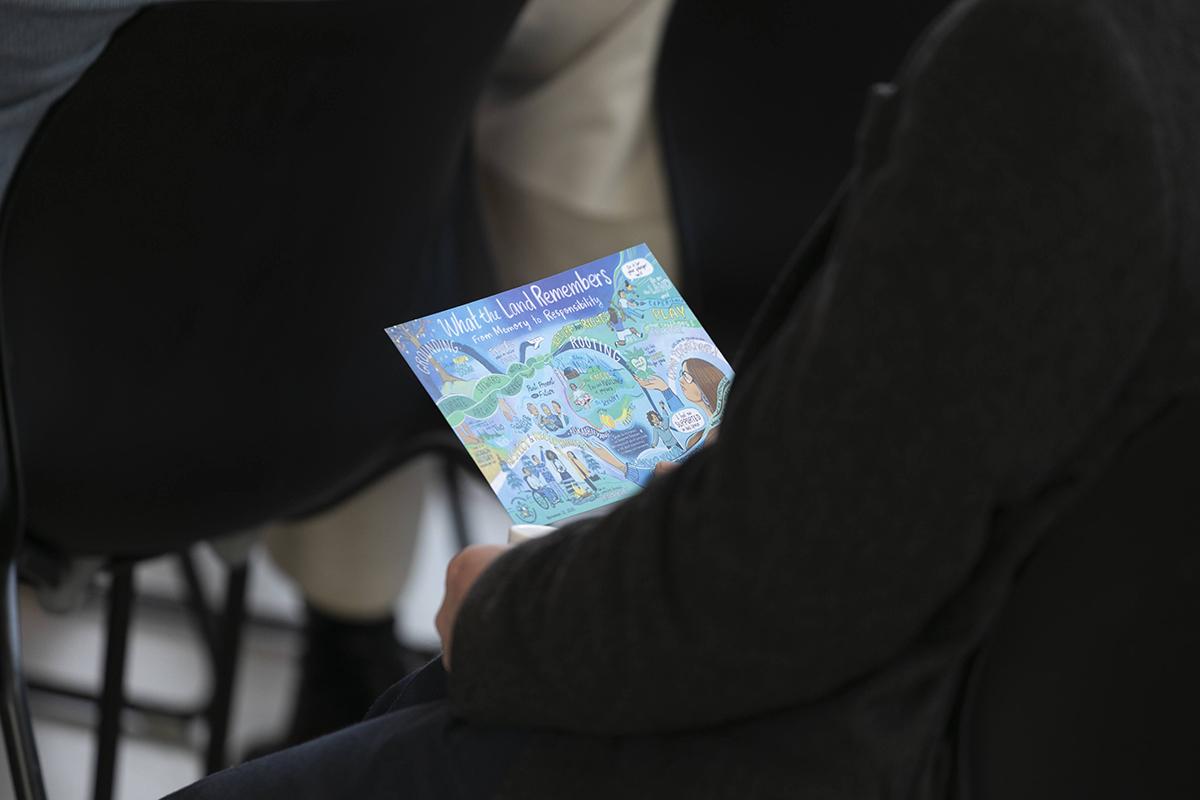
The work is shaped by four interconnected pathways that are not just institutional commitments but living practices that inform Indigenous education today and into the future.
They are:
• Being (Transforming): Who we are, how we see ourselves, and how we show up in this work.
• Knowing (Embedding): What we understand, carry and share as knowledge and truth.
• Relating (Sustaining): How we connect, build trust and uphold responsibilities to others.
• Doing (Evolving): The actions, structures and systems we create to carry forward our commitments.
“Together, these pathways remind us that reconciliation is not a single act – it’s a continuous process of learning, unlearning and reimagining,” said Williams. “It calls on us to transform who we are, deepen what we know, strengthen how we relate and take meaningful action.”
The first phase of the plan focuses on five key goals: enabling Indigenous learners to realize their full potential, creating a safe and welcoming learning environment, designing education that reflects Indigenous ways of learning, expanding access to programs, and increasing Indigenous employee representation across the institution.
“This is how Biskaabiiyang comes to life – by embedding Indigenous education into the heart of our strategies and creating spaces where Indigenous learners thrive,” said Williams. “Reconciliation must be more than words; it must be a sustained practice.”
“The vision of Biskaabiiyang calls us to return to ourselves – to the values of respect, relationship, responsibility and reciprocity,” said Ann Marie Vaughan, president and CEO of Humber Polytechnic. “It also calls us to reimagine a future where Indigenous students not only have access to education but can truly thrive within it. A future where Indigenous knowledges and worldviews are woven throughout our curriculum. Where our relationships with Indigenous communities are strong, accountable and sustained. Where Indigenous representation and leadership are present at every level of our institution.”
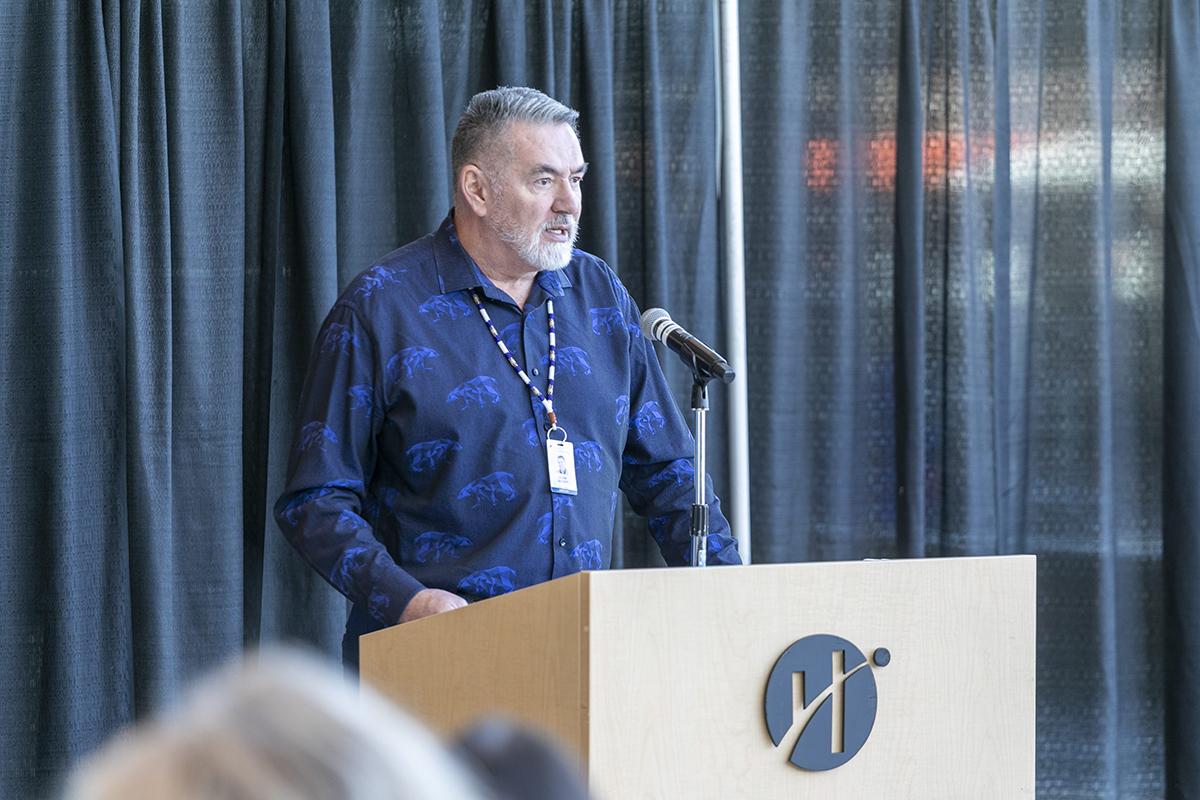
Jason Seright, vice-president of Inclusion, Belonging and Student Experience at Humber Polytechnic, said Biskaabiiyang builds on Humber’s first Indigenous Education Plan Naawsidoong Mino Nawendiwin: Building Good Relationships, which helped Humber build partnerships that were relational rather than transactional and that created spaces where Indigenous students could see themselves reflected. It also led to Humber weaving Indigenous knowledges, languages and philosophies into the institution’s fabric.
“Biskaabiiyang asks us to go even deeper,” Seright said. “To return to ourselves. To return to the teachings that have sustained our Nations for generations. To remember why this work matters - not in theory, but in spirit. This new plan is a continuation. A strengthening. A returning. It honours the communities who have walked beside us, sometimes pushing us, sometimes holding us accountable, always reminding us that reconciliation is not a destination - it is a practice. A daily choice. A responsibility we inherit and one we pass on.”
Find out more by visiting the Biskaabiiyang: Returning to Ourselves, Reimagining the Future webpage.