
In the 1970s, Humber Polytechnic established one of Canada’s most respected equestrian programs, gaining national and international recognition through competitive success, innovative teaching, and hands-on training. Central to this legacy was Elizabeth “Liz” Ashton, a world-ranked rider, member of the Canadian Equestrian Team for Eventing and a senior academic leader whose influence shaped both Humber’s Equine Studies program and its reputation on the international stage.
At the height of her competitive career, Ashton was ranked fourth in the world, an exceptional achievement for a Canadian rider competing largely outside the European circuit. She was an internationally acclaimed competitor in both event riding and show jumping, two of the most demanding Olympic equestrian disciplines, and represented Canada at the highest levels of international competition.
Ashton’s athletic career spanned more than a decade. She competed on the Canadian Show Jumping Team during the North American Fall international circuits in 1969 riding Darwen, in 1970 on Regardez and in 1972 on Scotch Valley. Her eventing achievements were equally distinguished. Ashton earned team silver at the 1975 Pan American Games riding Abracadabra, served as captain of Canada’s gold-medal team at the 1978 Eventing World Championships on Sunrise and later competed at the 1984 Olympic Games on Osian. These accomplishments firmly positioned her among the most successful Canadian equestrians of her era.
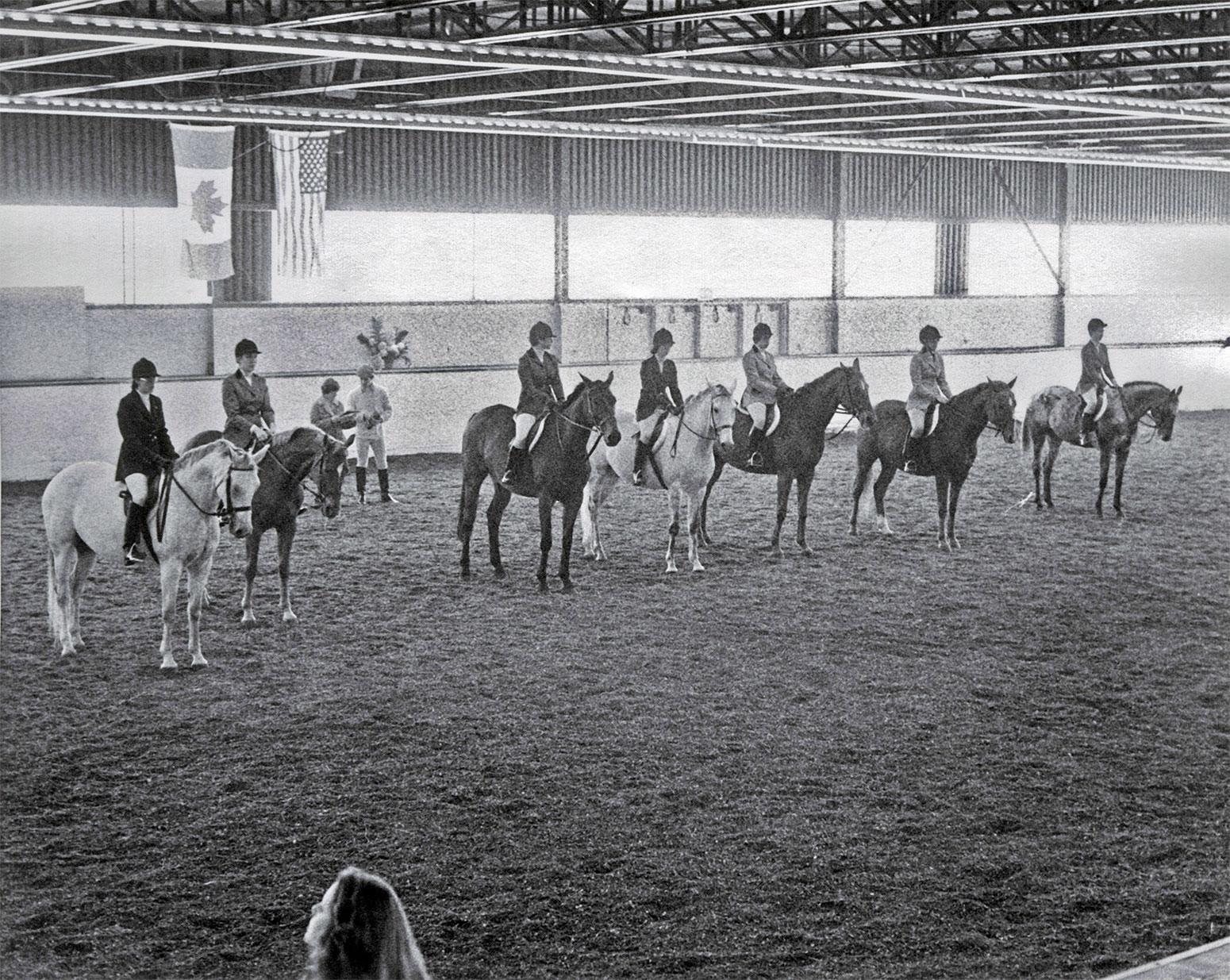
Alongside her international career, Ashton held key leadership roles at Humber. She served as Director of Equine Studies from 1973 to 1982, followed by appointments as chair and associate dean of Applied and Creative Arts (1982–1985), and later as dean of Hospitality, Tourism and Leisure Management (1986–1990). Her ability to balance elite competition with academic leadership defined the intensity and credibility of Humber’s equestrian programming.
Ashton credited much of her success to the demanding North American Fall Circuit, which took her through competitions in Washington, New York, Harrisburg, and Toronto’s Royal Agricultural Winter Fair. Among her most celebrated victories was the President’s Cup at the Washington International Horse Show in 1972, won with Scotch Valley.
Humber’s first foal
Beyond competition, Humber’s equestrian program was defined by hands-on education. A major milestone occurred on March 11, 1975, when Humber welcomed its first foal at the North Campus Equine Centre. Born to the mare Milady before staff arrived for the morning shift, the colt was discovered standing and nursing by stablehand Dave Willie at 5:30 a.m.
The unexpected arrival quickly became an educational opportunity. Two second-year Horsemanship students were given full responsibility for the foal’s care, including feeding, grooming, and monitoring his development. They named him Kanjarro and he became a familiar presence in the barn.
Director of Horsemanship Studies, Dick Burgis, described Kanjarro as a valuable teaching tool, noting that few students had the opportunity to work with a horse from birth. His arrival marked the beginning of Humber’s involvement in breeding and early-stage equine development, reinforcing the program’s emphasis on experiential learning through daily responsibility.
Competition and campus pride
Humber’s equestrian teams were also a significant source of campus pride. In January 1975, Humber hosted the Colleges and Universities Intercollegiate Riding Association championships at the Equine Centre, welcoming teams from across Ontario. Humber entered two teams composed of top second-year Equine Studies students.
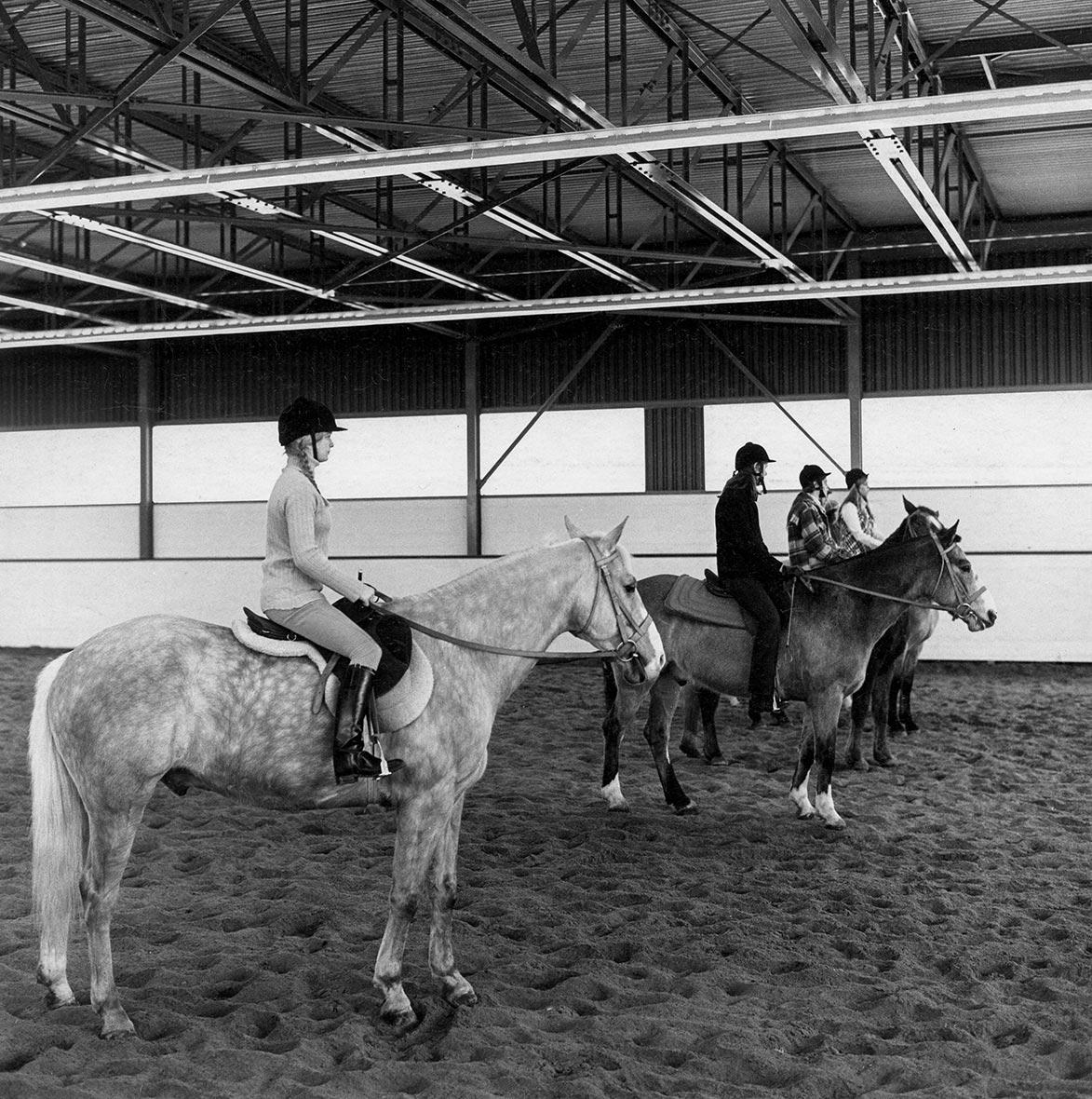
Humber’s leading team — Alan Manning, Elaine Moorlag and Mary Odette — tied with McMaster for first place overall. The championship was decided by a relay race, which Humber won with a time of 4 minutes and 39 seconds, narrowly defeating McMaster’s 4 minutes and 53.2 seconds finish.
Individual riders delivered strong performances across events. Humber’s top team placed first in group dressage while riders earned multiple top-five finishes in individual dressage and stadium jumping.
Although equestrian training is no longer part of Humber’s curriculum, the riders, instructors, and horses of the 1973-1995 equestrian program remain a defining chapter in Humber’s history. Their achievements reflect a period when Humber combined education with elite competition, establishing a legacy that extended far beyond campus grounds.