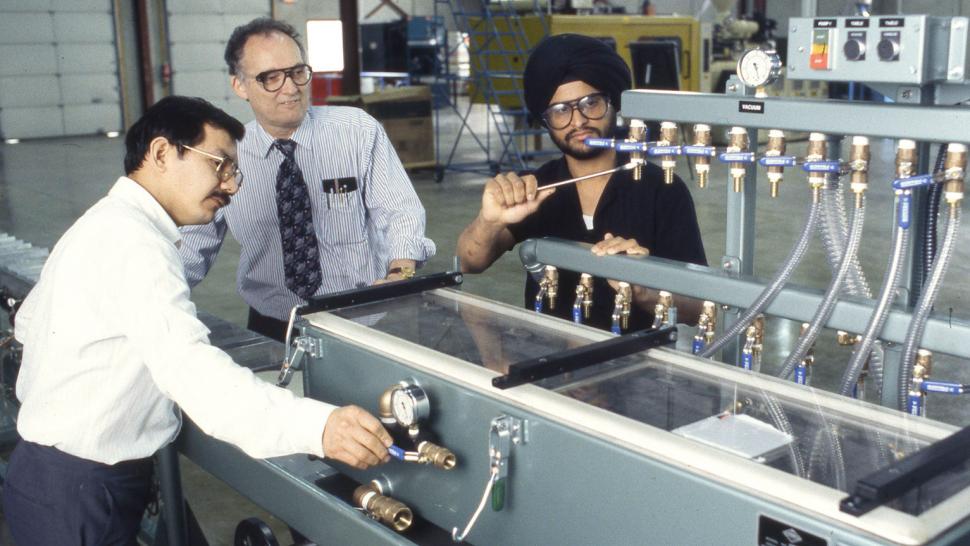
In 1992, Humber Polytechnic was one step closer to becoming the first plastic training institute in Ontario.
The plastic industry was booming in the 90s – it was Canada’s third-fastest growing manufacturing sector and there was a shortage of skilled labour in the industry. That meant there was a need for a training hub to equip people with the necessary theoretical and practical skills to meet the growing trends and demands in the industry.
A collaborative partnership was forged with the Society of Plastics Industry of Canada, the Ontario Federation of Labour, the federal and provincial governments along with other colleges and universities and it was agreed that Humber would develop the Canadian Plastic Training Centre (CPTC).

In the Fall semester of 1993-94, the CPTC became a reality, and it was the first of its kind. The grand opening for the CPTC took place on September 28, 1993, on Woodbine Downs Boulevard at Carrier Drive. Equipment and material for the centre was fully funded or donated by the Society of the Plastics Industry of Canada.
Humber’s goal was to address a critical shortage of trained personnel in the plastic industry. Under the directorship of David Alcock and Faculty Program Coordinator Marijan Fuchs, a two-year Plastics Engineering Technician diploma was developed that was geared at a thorough education in plastic technology, plastic chemistry, production robotics and electronics. There was also a one-year Plastics Operators Certificate program aimed at upgrading the skills of people already employed in the plastic industry.
CPTC specialized in four process technologies:
• Injection Molding
• Blow Molding
• Blown Film
• Extrusion
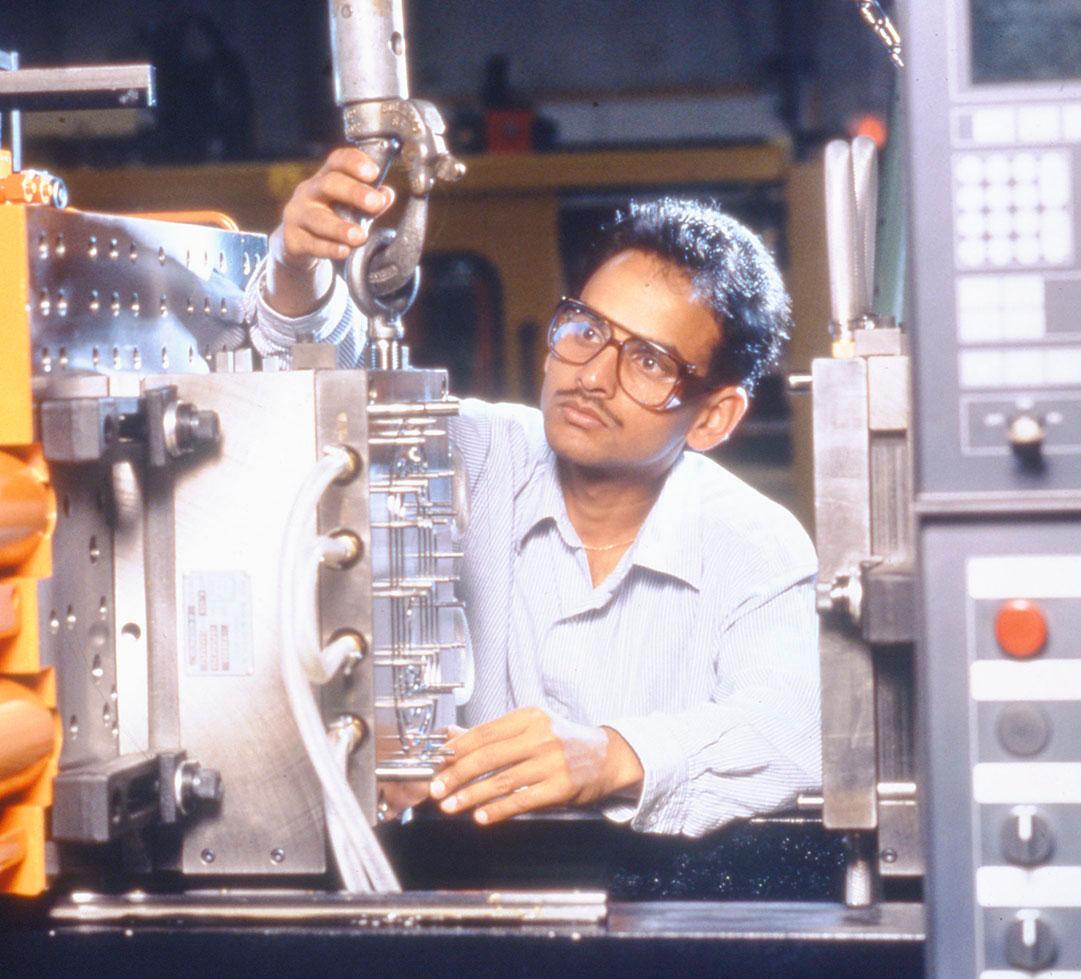
In addition to being a training centre, the CPTC was also sustainable and generated income. Private companies could rent the facility to upgrade their employee skills in a classroom setting. Seeing all the growth and progress with the CPTC, it’s no wonder Alcock remarked “Humber is a technology driven college” and as such a “good fit” with equal partners.
Fast-forward 15 years later to 2009 when the demand for plastic technology was on the decline and more than 9,000 people were laid off in an industry that had hired over 100,000, according to Serge Lavoie president and CEO of Canadian Plastics Industry Association. Alcock also pointed out that more than 500 students graduated from Humber’s full-time plastics programs and more than 1,000 employees received training in plastics processing through the CPTC in its 15 years. However, there was a steady decline in applicants to the programs and the Humber CPTC closed its doors in February 2009.