What began as an observation by a Humber Polytechnic alumnus has led to a meaningful sustainability improvement at Lakeshore Campus and an example of how environmental leadership can come from any field of study.
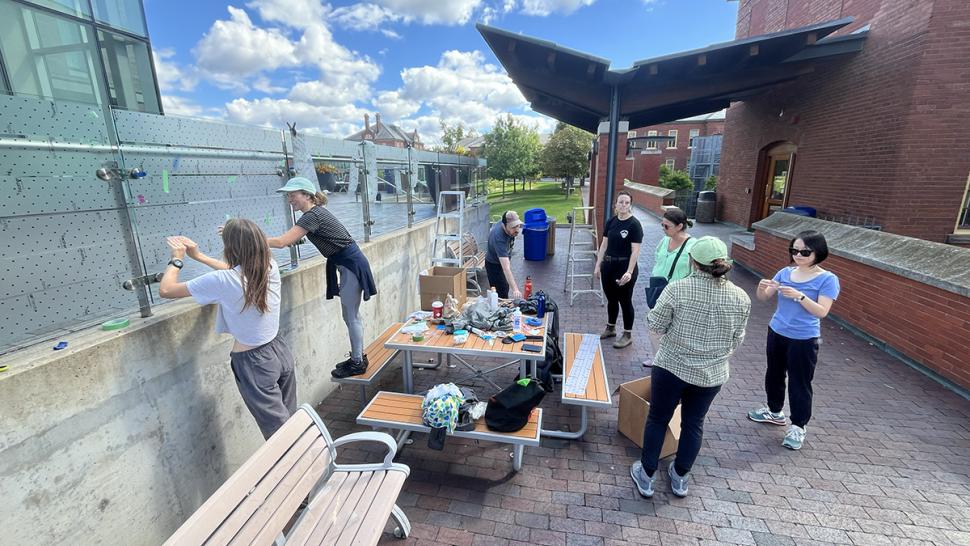
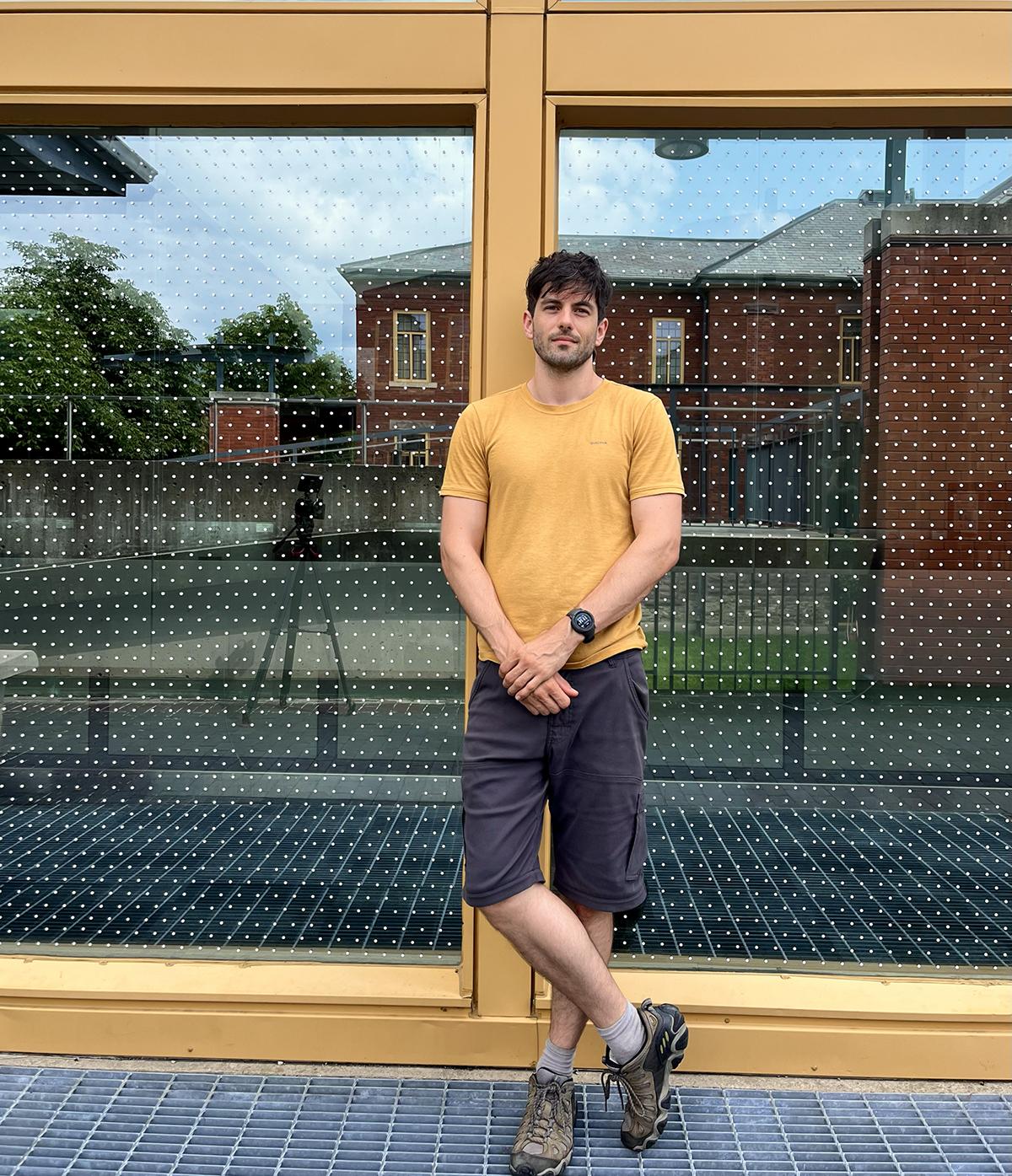
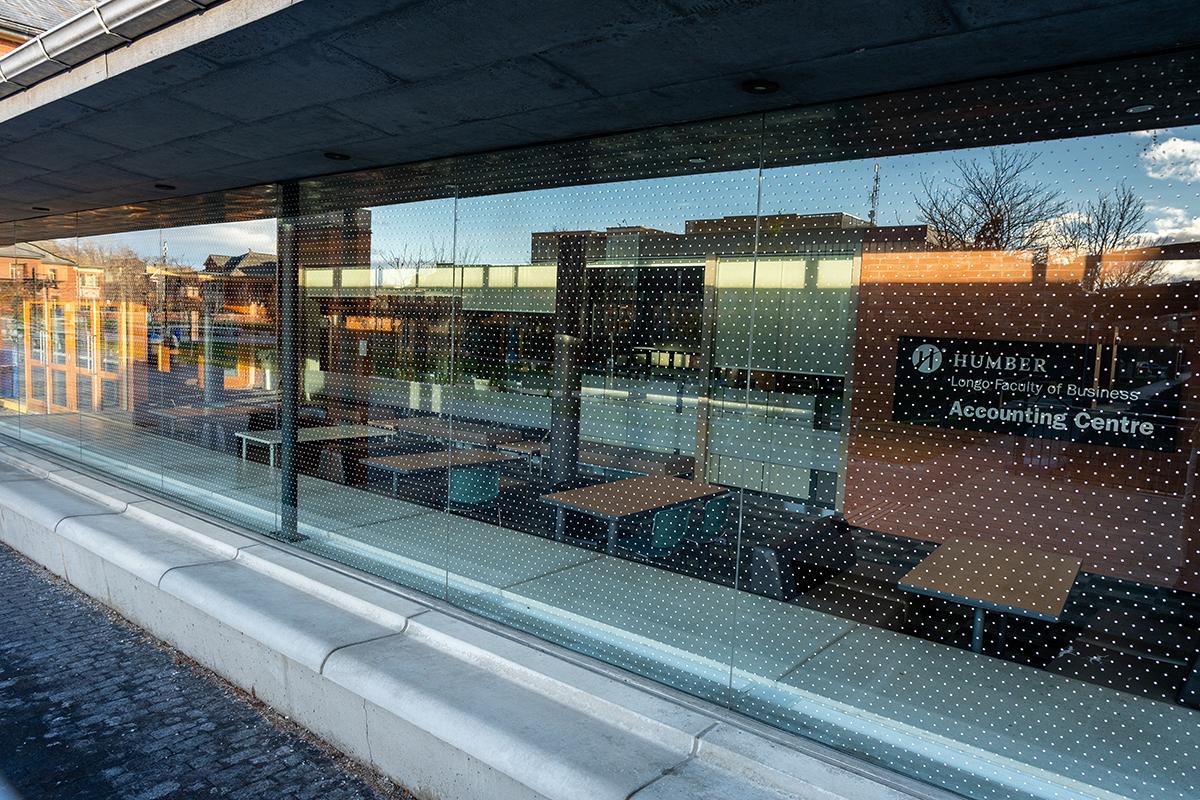
Thomas Varey, a Humber graduate who volunteers with several wildlife and nature conservation organizations, raised concerns after documenting bird-window collisions on campus. Working alongside Humber’s Office of Sustainability and Capital Development and Facilities Management, Varey recently led a project to install bird-deterrent dot markers on high-risk glass surfaces to significantly reduce the risk of fatal collisions.
“This issue isn’t unique to Humber,” said Varey. “Any glass that reflects trees or sky is likely to experience bird collisions. The frequency depends on how reflective the glass is, how attractive the surrounding habitat is to birds, and where the building sits along migratory routes.”
With the campus’ proximity to green space and Lake Ontario, which is a major migratory corridor, Varey knew the risk would be elevated. Along with two colleagues, he began regularly monitoring buildings and documenting bird strikes.
“In 2024 alone, we recorded more than 150 dead or injured birds around campus,” he said. “And that only represents a fraction of the true number since many collisions go undetected.”
Varey decided to take action.
“I’ve lived in this area for many years and spend a lot of time in Colonel Sam Smith Park filming and observing wildlife,” he said. “Protecting native biodiversity is deeply important to me and simply documenting these collisions was never an option. I also knew Humber had a strong commitment to sustainability, so I felt confident the concern would be taken seriously.”
“This project shows what’s possible when passionate alumni, staff and students come together around a shared sustainability goal,” said Sandra Leutri, sustainability manager, Office of Sustainability. “Thom’s leadership helped us move quickly from concern to action and the result is a safer campus environment for local wildlife.”
Turning concern into action required careful planning. Varey measured hundreds of panes of glass across campus, gathered quotes from local suppliers and analyzed where collisions were occurring most frequently. He then prioritized which areas could be treated most effectively and affordably.
“There are already proven solutions to bird-window collisions,” said Varey. “The real challenge is collecting data and presenting it in a way that helps institutions prioritize implementation.”
With coordination support from the Office of Sustainability and Capital Development and Facilities Management, Varey assembled a volunteer team to complete the installation work. Many of the volunteers came from FLAP Canada, a bird-safe advocacy organization, as well as current Humber Sustainability Ambassador students
“My original estimate of one or two days of work was wildly optimistic,” he said. “The project ended up stretching over several months, which really highlighted how much effort goes into conservation solutions and how valuable committed volunteers are.”
The majority of identified high-risk glass areas were treated over the summer and fall. While the project wrapped up late in the season, continued monitoring is planned during the upcoming spring and fall migration cycles.
“Based on the effectiveness of the deterrents we used, we expect a 95 per cent or greater reduction in collisions in the treated areas,” said Varey. “Ongoing monitoring will allow us to confirm that and help guide future treatments on campus.”
For Varey, the project carries special meaning as a Humber graduate.
“Above all, the most meaningful part is knowing that we’ve prevented many birds from fatally colliding with glass on campus,” he said. “I also hope this helps normalize bird-safe glass and sparks curiosity among students to learn about the issue and advocate for expanding these efforts.”
The Bachelor of Music alumnus now works in cinematography, music production and audio engineering and his career path underscores how environmental sustainability initiatives and leadership can come from anyone regardless of their area of study.